


Trump Administration Sanctions ICC Officials Over Gaza War Probes

NEW YORK — The Trump administration imposed sanctions on the president of the International Criminal Court (ICC) and a senior prosecutor who has investigated Israeli officials over the war in Gaza. This action is drawing major attention because it escalates conflict between the U.S. and the ICC and could affect international legal and diplomatic pressure around the war.
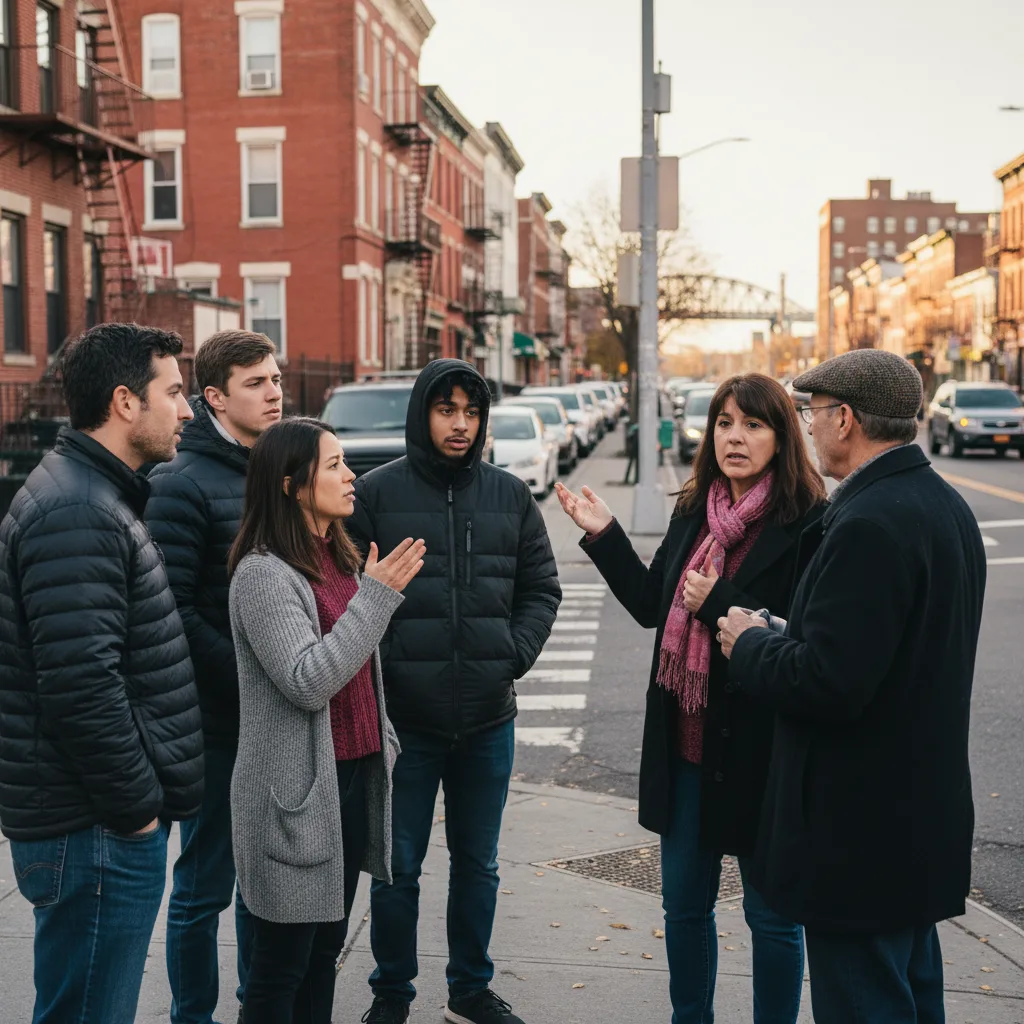
Queens Residents Debate ICC Sanctions and Accountability
On Cross Bay Boulevard, the Trump administration's sanctions against International Criminal Court officials have ignited kitchen-table arguments about accountability and international justice. Residents are divided, with some supporting Israel and others advocating for the role of international courts. Many express frustration with Washington's perceived role in polarizing the conflict.
Local conversations in Queens are centering on whether these sanctions will make the conflict in Gaza harder to resolve. People at delis, barber shops, and neighborhood meetings are treating this development as a clear sign that global disputes are becoming increasingly polarized. This complex issue highlights the diverse political views within the community.
Escalation of Conflict Between US and ICC
The imposition of sanctions on ICC President Chile Eboe-Osuji and Chief Prosecutor Fatou Bensouda represents a significant escalation in the ongoing tension between the United States and the International Criminal Court. The Trump administration has long opposed the ICC's jurisdiction over U.S. and allied personnel, particularly concerning investigations related to the war in Gaza. These actions signify a direct challenge to the court’s authority.
This move by the U.S. could have profound implications for international legal norms and the enforcement of human rights. It also raises questions about the future role of the ICC in prosecuting war crimes and crimes against humanity. Diplomatic analysts are closely monitoring the fallout, anticipating potential ripple effects on global justice mechanisms.
Implications for International Pressure on Gaza War
Sanctions against key ICC officials threaten to undermine the court's ability to investigate alleged war crimes in Gaza, thereby potentially reducing international legal and diplomatic pressure on the conflict. Proponents of the ICC argue that its work is essential for holding powerful actors accountable and providing justice for victims. The U.S. stance is viewed by some as an attempt to shield allies from scrutiny.
Conversely, supporters of the sanctions argue that the ICC lacks legitimate jurisdiction and that its investigations are politically motivated. This divergence of views complicates efforts to bring about a resolution in the Gaza conflict. The international community is now grappling with how to maintain pressure for peace and justice amidst these new diplomatic hurdles.
Historical Context of US-ICC Relations
The United States has had a complex relationship with the International Criminal Court since its inception. While the U.S. initially signed the Rome Statute, which established the ICC, it later withdrew its signature and has never ratified the treaty. Concerns about potential politically motivated prosecutions of U.S. military personnel have been a consistent theme in U.S. policy.
Previous U.S. administrations have also expressed reservations about the ICC, but the Trump administration's direct sanctions mark a more aggressive approach. This history provides context for the current tensions, highlighting deeply entrenched disagreements over international legal sovereignty. The latest sanctions are a continuation of a long-standing U.S. position, albeit with heightened intensity.
Community Views and Future of ICC Authority
The future authority and effectiveness of the International Criminal Court are now subjects of intense debate globally and within Queens. Many international law experts are concerned that the sanctions could weaken the institution, making it harder to address future atrocities. The local conversations on Cross Bay Boulevard reflect these broader concerns about global governance.
Queens residents are grappling with the ethical and political dimensions of the sanctions, discussing the balance between national sovereignty and international justice. The outcome of this standoff between the U.S. and the ICC will likely have lasting implications for international legal frameworks. This situation also underscores the broader impact of global events on local communities, similar to discussions around Israeli airstrikes on a Syrian airbase.
Frequently Asked Questions
What is the International Criminal Court (ICC) and what is its purpose? The International Criminal Court (ICC) is an intergovernmental organization and international tribunal that sits in The Hague, Netherlands. Its purpose is to prosecute individuals for international crimes of genocide, crimes against humanity, war crimes, and the crime of aggression when national courts are unable or unwilling to do so. It aims to ensure that perpetrators of these grave crimes are held accountable.
How do U.S. sanctions typically affect international organizations or individuals? U.S. sanctions typically involve restrictions on financial transactions, asset freezes, and travel bans, designed to pressure targeted individuals or entities. For international organizations like the ICC, sanctions against its officials can disrupt operations, impede investigations, and limit diplomatic engagement. Such measures are intended to exert political and economic leverage to influence specific behaviors or policies.
Written by
Newstrix
Cross Bay News
Related Articles
More in National & World →
Police Fire Tear Gas as Protests Spread Across France 2026
Police fired tear gas as tens of thousands rallied across France on Oct 6, 2026, protesting for education reforms. High schools were blockaded.

Cross Bay Boulevard Residents React to Ukraine Drone Attack on Moscow
Cross Bay Boulevard residents voice concerns as Ukraine launches a major drone attack on Moscow, signaling conflict escalation and raising local anxieties.
56-Year-Old Exporter Granted Bail in St James Parish Court 2026
A 56-year-old exporter was granted $600,000 bail in St James Parish Court, Montego Bay, on Oct 6, 2026, after his attorney challenged the charges.
French Student Protests Spread, Prompting Global Concern
French student protests are spreading nationwide, sparking global concern and discussions among international observers and Cross Bay Boulevard residents.
Cross Bay Boulevard Residents Anxious Over Escalating Global Tensions 2026
Cross Bay Boulevard residents express anxiety as North Korea missile tests and stalled Iran talks escalate global tensions. Concerns arise about local economic impacts.
Kyiv Northern Bridge Strike Prompts Safety Discussions Among Cross Bay Residents 2026
Cross Bay Boulevard residents, especially those with ties to Ukraine, are discussing civilian safety and transportation disruptions after a Russian strike hit Kyiv's Northern Bridge on October 3, 2026. This impacts Queens communities.