


Trump Projects Iran War End in Weeks Amid Queens Community Skepticism

NEW YORK — "I expect the U.S. war with Iran to end within several weeks, despite unrelenting attacks from the regime," President Donald Trump stated in a recent high-profile interview on January 14, 2026, offering a surprisingly short timeline for the protracted conflict. This assertion comes amid continued missile exchanges in the region and Iran's persistent control over the critical Strait of Hormuz, which has sent ripples of concern through global energy markets.
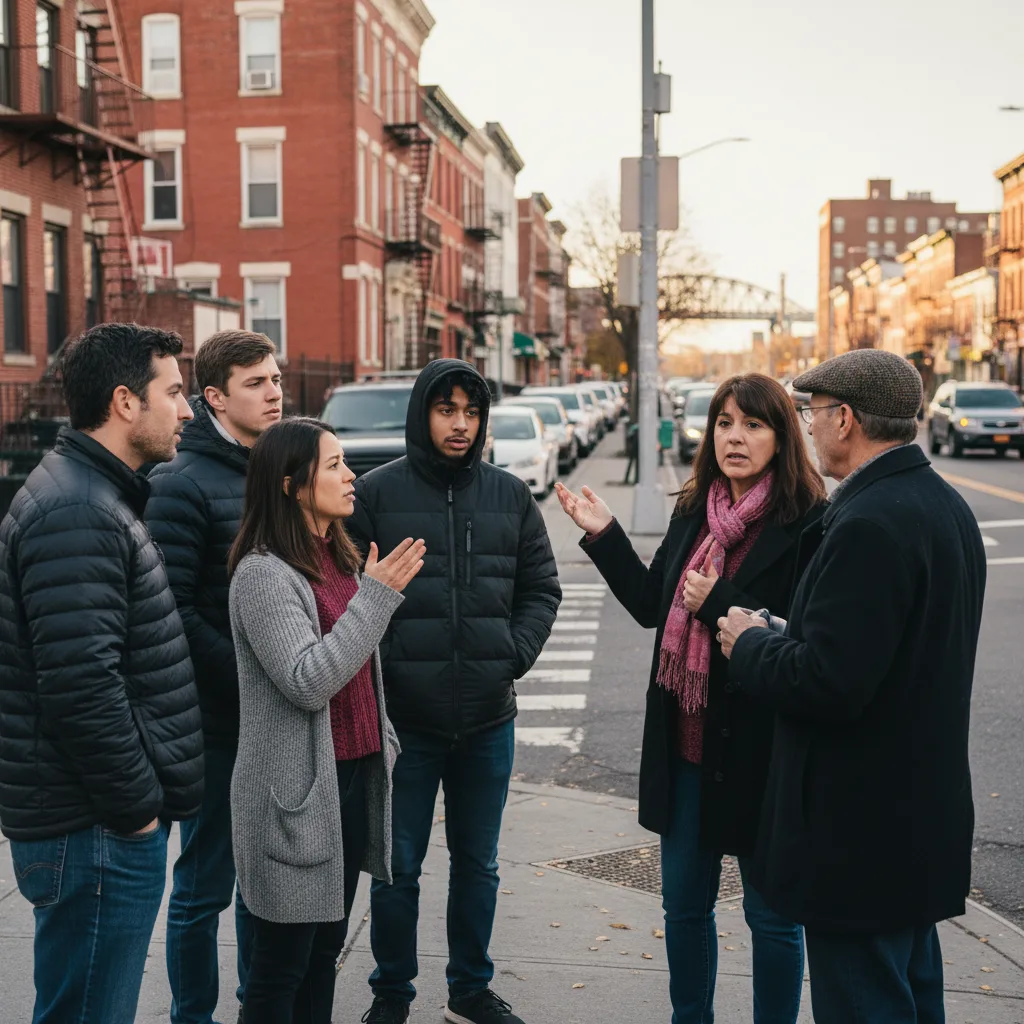
While the White House projects a swift resolution, the pronouncement has been met with significant skepticism among many Queens residents, particularly those along Cross Bay Boulevard, who are already feeling the tangible economic effects of geopolitical tensions. Discussions at local delis, like the bustling Cross Bay Diner in Broad Channel, reveal widespread apprehension about the war's impact on their daily lives and the local economy, which relies heavily on stable fuel prices for everything from commutes to commercial deliveries.
Local Voices: Fear of Rising Costs
On a chilly Wednesday morning, the usual banter at the Cross Bay Diner in Broad Channel took a more serious turn as patrons dissected President Trump’s remarks over coffee and breakfast. Maria Rodriguez, a retired schoolteacher from Howard Beach and regular at the diner, voiced a common sentiment. "He's talking weeks, but gas prices are already killing my commute to JFK. I fill up my tank, and it’s fifty cents more than last week. How can he say it will end quickly when we're seeing this kind of instability?" Her concerns are echoed by numerous residents who rely on their vehicles for work and errands across the vast expanse of Queens.
Local cab drivers, a significant demographic along Cross Bay Boulevard, are particularly vulnerable to fluctuating fuel costs. Many have taken to sharing videos of recent missile incidents in the Persian Gulf on WhatsApp groups, discussing how potential oil spikes could severely impact their fares and overall profitability. Jamal Khan, a taxi driver for over 15 years, noted, "Every dollar increase in gas means I have to work an extra hour just to break even. This talk of war ending quickly sounds good, but we need to see it to believe it, especially with all the uncertainty around the Strait of Hormuz, which we all know affects us directly." The economic anxieties stemming from global events are clearly palpable in these local conversations.
Geopolitical Tensions and the Strait of Hormuz
The Strait of Hormuz, a narrow waterway connecting the Persian Gulf to the open sea, remains a focal point of the U.S.-Iran conflict. An estimated 20% of the world's petroleum and a significant portion of its liquefied natural gas pass through this choke point daily. Iran's perceived control and threats to shipping lanes have introduced volatility to global oil prices, directly affecting consumers in New York City, which relies heavily on international energy markets.
President Trump's statement came as his administration continues to direct Department of Homeland Security actions related to perceived threats, while also issuing threats to NATO allies for their perceived reluctance to join the conflict. Near-misses involving U.S. jets and Iranian missile exchanges have been widely reported by international news outlets like ABC News, further complicating any predictions of a swift resolution. The world stage, including economic analysts, remains focused on potential escalation and the humanitarian risks in the region, recognizing the long-term implications of sustained conflict.
Community Activism: Calls for Anti-War Vigils
Beyond economic concerns, the ongoing conflict has stirred a sense of civic duty and calls for peace within the Queens community. Community board meetings, particularly at the VFW hall in Broad Channel, are buzzing with discussions and plans for potential anti-war vigils in local parks. Organizers are looking at popular gathering spots like the Frank Charles Park, a well-known green space along the Cross Bay Boulevard causeway, as possible locations for peaceful demonstrations designed to raise public awareness and advocate for de-escalation.
"We cannot stand idly by while war rages on and affects our families here at home," asserted Evelyn Perez, a community organizer and long-time resident of Broad Channel, speaking to local media. "Even if the White House says it's weeks, the human cost, the economic cost – it’s already too high. We need to raise our voices for peace and call on our representatives to prioritize diplomatic solutions." Such local initiatives highlight the deep connection Queens residents feel to global events, understanding their direct and indirect implications for their neighborhoods.
Economic Repercussions for Queens
The war's impact on global oil supplies and transportation logistics poses significant economic repercussions for a densely populated borough like Queens. Businesses along Cross Bay Boulevard, from small mom-and-pop shops to larger retail establishments, face increased operational costs due to rising transportation expenses. These costs are often passed on to consumers, leading to higher prices for everyday goods and services, further straining household budgets already stretched thin by inflation.
According to an analysis by the U.S. Energy Information Administration (EIA), a sustained disruption in the Strait of Hormuz could lead to a 15-20% increase in crude oil prices within weeks, translating directly to higher prices at the pump for motorists in Queens. For residents, many of whom commute to Manhattan or other boroughs, this means a tangible reduction in disposable income, impacting their quality of life. The uncertainty alone can deter investment and consumer spending, potentially slowing local economic growth across the borough, according to recent warnings from the Congressional Budget Office.
Frequently Asked Questions Regarding the Iran Conflict and Queens Impact
What is President Trump's latest prediction for the Iran conflict? President Trump stated in a recent interview that he expects the U.S. war with Iran to conclude within several weeks, despite ongoing attacks and regional instability. How are Queens residents reacting to this timeline? Many residents along Cross Bay Boulevard express skepticism, citing concerns about already rising gas prices and the economic strain on their commutes and businesses, viewing the timeline as overly optimistic. What is the significance of the Strait of Hormuz? The Strait of Hormuz is a vital global chokepoint through which approximately 20% of the world's petroleum and significant natural gas supplies transit daily, making it critical for global energy markets and prices. Are there any local community actions planned? Yes, community board meetings at the Broad Channel VFW hall have discussed organizing anti-war vigils in local parks, such as Frank Charles Park, to advocate for de-escalation and peace. What economic impacts are foreseen for Queens? Experts predict potential increases in gas prices and higher operational costs for local businesses, which could lead to increased prices for consumers and a reduction in disposable income across the borough, affecting household budgets significantly.
Written by
Newstrix
Cross Bay News
Related Articles
More in National & World →
Police Fire Tear Gas as Protests Spread Across France 2026
Police fired tear gas as tens of thousands rallied across France on Oct 6, 2026, protesting for education reforms. High schools were blockaded.

Cross Bay Boulevard Residents React to Ukraine Drone Attack on Moscow
Cross Bay Boulevard residents voice concerns as Ukraine launches a major drone attack on Moscow, signaling conflict escalation and raising local anxieties.
56-Year-Old Exporter Granted Bail in St James Parish Court 2026
A 56-year-old exporter was granted $600,000 bail in St James Parish Court, Montego Bay, on Oct 6, 2026, after his attorney challenged the charges.
French Student Protests Spread, Prompting Global Concern
French student protests are spreading nationwide, sparking global concern and discussions among international observers and Cross Bay Boulevard residents.
Cross Bay Boulevard Residents Anxious Over Escalating Global Tensions 2026
Cross Bay Boulevard residents express anxiety as North Korea missile tests and stalled Iran talks escalate global tensions. Concerns arise about local economic impacts.
Kyiv Northern Bridge Strike Prompts Safety Discussions Among Cross Bay Residents 2026
Cross Bay Boulevard residents, especially those with ties to Ukraine, are discussing civilian safety and transportation disruptions after a Russian strike hit Kyiv's Northern Bridge on October 3, 2026. This impacts Queens communities.