


U.S. and Iran Announce Ceasefire, Strait of Hormuz Reopens Amid Market Swings

NEW YORK — A tentative two-week ceasefire between the United States and Iran, brokered by Pakistan, was announced on April 8, 2026, bringing a temporary halt to escalating tensions and leading to the immediate reopening of the crucial Strait of Hormuz. The accord, reached just hours before a U.S. deadline, caused global oil prices to plunge over 16%, creating a volatile shift in international markets and generating mixed reactions along Cross Bay Boulevard.
President Trump hailed the agreement as a "double-sided ceasefire," while Iran's Supreme National Security Council accepted the terms but warned that its "hands remain on the trigger." This fragile truce follows weeks of intense rhetoric and military maneuvers, including U.S. strikes on Iranian military targets.
Local Impact on Cross Bay Boulevard
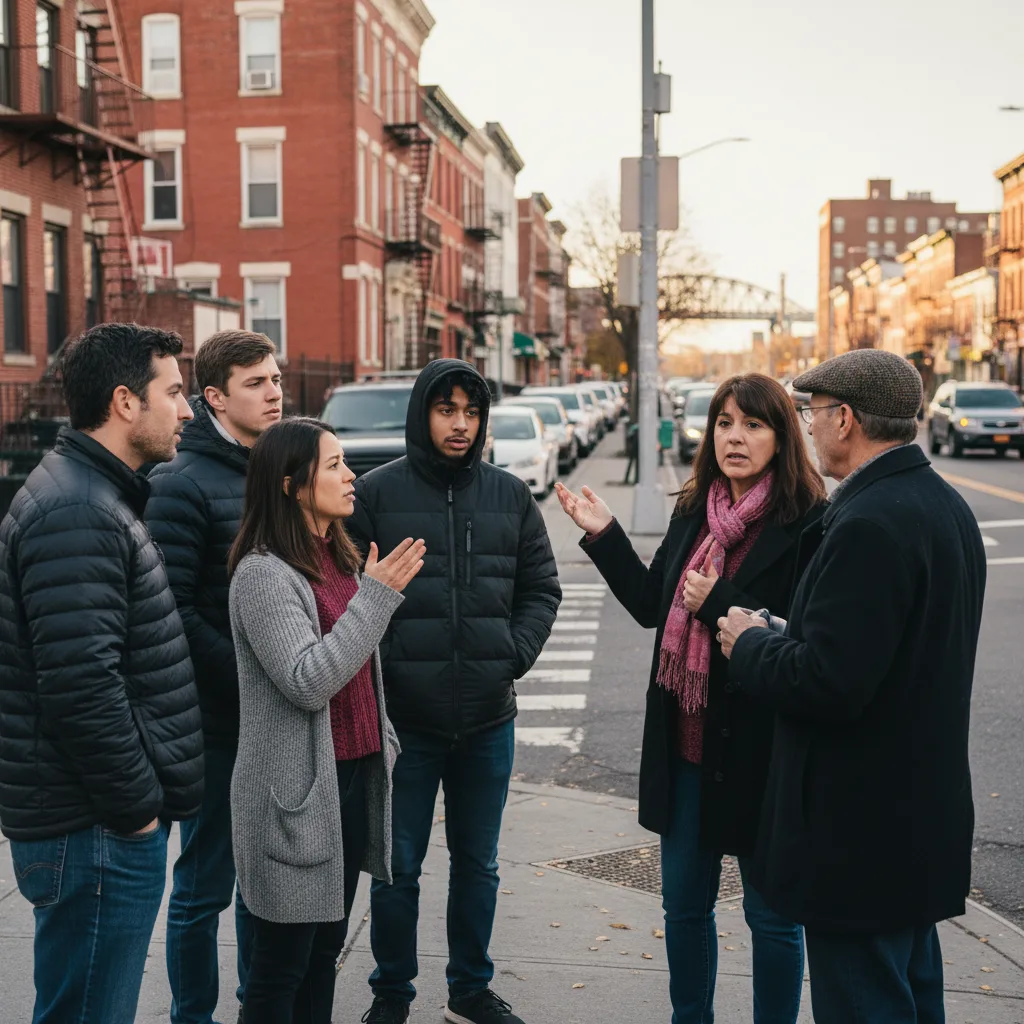
Residents along Cross Bay Boulevard are buzzing at local delis and bus stops, with many Queens cabbies and shop owners expressing cautious relief over falling gas prices. For weeks, the specter of soaring fuel costs had loomed large, impacting daily commutes and small business operations. The roaring planes overhead departing from JFK Airport often remind Cross Bay residents of their connection to global events.
"The gas prices were getting out of hand," stated Tony Rizzo, owner of Rizzo's Pizza near the Cross Bay Bridge. "When you're constantly filling up, every penny counts. This ceasefire, if it holds, is good news for our bottom line and for customers just trying to get around." His sentiments were echoed by many small business owners dependent on transportation costs.
However, the relief is tempered with apprehension. Many worry that the shaky ceasefire could easily collapse, sending oil prices skyrocketing once more. The Cross Bay News Facebook group is filled with posts from Howard Beach locals debating the effectiveness of Trump's tough talk, with some calling it "smart negotiating" and others fearing a prolonged conflict could severely impact NYC ports and global trade routes, disrupting local supply chains. The news from the [U.S. and Iran accord](https://www.www.democracynow.org/2026/4/8/headlines) has been a constant topic of conversation.
Community Board Discussions and Iranian-American Anxieties
At recent community board meetings near the boulevard, folks have been discussing how cheaper oil might ease commute costs, particularly for those working at JFK Airport or those traveling down Flatbush Avenue to other boroughs. The direct economic benefit, though potentially short-lived, offers a tangible silver lining for many households.
Despite the economic relief, Iranian-American families in the area voice profound anxiety over the situation, particularly following reports of a destroyed Tehran synagogue. The broader implications of the conflict, and the threats made by both sides, weigh heavily on those with ties to the region. "My family is constantly glued to the news, hoping for true peace, not just a temporary pause," shared Farida Ghobadi, a resident of Ozone Park with relatives in Iran, speaking at a community gathering.
Global Reactions and Next Steps
Internationally, the ceasefire has been met with a mixture of hope and skepticism. While major powers welcomed the de-escalation, concerns remain about the long-term stability of the agreement. Diplomatic efforts will now focus on transforming the temporary truce into a more lasting resolution, a process that is expected to be fraught with challenges. The initial agreement was detailed by [Democracy Now!](https://www.democracynow.org/2026/4/8/headlines) reporting.
Experts from St. John's University’s Global Studies department noted that while the oil price drop is immediate, sustained economic recovery requires prolonged stability. "A two-week ceasefire is a start, but the market's long-term confidence depends on a verifiable commitment to de-escalation," explained Dr. Lena Petrova, a Middle East policy specialist, during an interview with Cross Bay News. This cautious optimism is shared by many.
Economic Outlook for Queens
The ripple effects of global events highlight the interconnectedness of Queens with international affairs. Local businesses and commuters will continue to monitor the situation closely, hoping for sustained peace that will translate into predictable and affordable energy costs. The resilience of Cross Bay Boulevard's diverse community is evident as residents navigate these global pressures while maintaining their local spirit. Efforts to support [local Queens businesses](https://www.crossbaycurrent.com/business/queens-economic-outlook) are ongoing, irrespective of global events.
For now, the reopening of the Strait of Hormuz and the dip in gas prices offer a moment of respite. However, the underlying tensions suggest that Cross Bay Boulevard's residents, like many across the city, will remain keenly attuned to developments in the Middle East.
Frequently Asked Questions About the U.S.-Iran Ceasefire
What are the key terms of the U.S.-Iran ceasefire? The agreement is a tentative two-week ceasefire brokered by Pakistan. It includes Iran agreeing to reopen the Strait of Hormuz, a critical shipping lane. President Trump called it a "double-sided ceasefire."
How did the ceasefire impact oil prices? Following the announcement, global oil prices plunged over 16%, reversing earlier surges. This has led to a noticeable, though potentially temporary, drop in gas prices at local pumps in Queens.
What are local residents' reactions in Queens? Residents along Cross Bay Boulevard, especially cab drivers and small business owners, expressed cautious relief over the falling gas prices but remain worried about the ceasefire's fragility. Iranian-American families in the area also voiced anxiety over the broader conflict's implications.
Why is the Strait of Hormuz important? The Strait of Hormuz is a narrow waterway crucial for global oil shipments. Its closure, threatened by Iran, would severely disrupt international trade and energy markets, causing significant economic repercussions worldwide.
Written by
Newstrix
Cross Bay News
Related Articles
More in National & World →
Police Fire Tear Gas as Protests Spread Across France 2026
Police fired tear gas as tens of thousands rallied across France on Oct 6, 2026, protesting for education reforms. High schools were blockaded.

Cross Bay Boulevard Residents React to Ukraine Drone Attack on Moscow
Cross Bay Boulevard residents voice concerns as Ukraine launches a major drone attack on Moscow, signaling conflict escalation and raising local anxieties.
56-Year-Old Exporter Granted Bail in St James Parish Court 2026
A 56-year-old exporter was granted $600,000 bail in St James Parish Court, Montego Bay, on Oct 6, 2026, after his attorney challenged the charges.
French Student Protests Spread, Prompting Global Concern
French student protests are spreading nationwide, sparking global concern and discussions among international observers and Cross Bay Boulevard residents.
Cross Bay Boulevard Residents Anxious Over Escalating Global Tensions 2026
Cross Bay Boulevard residents express anxiety as North Korea missile tests and stalled Iran talks escalate global tensions. Concerns arise about local economic impacts.
Kyiv Northern Bridge Strike Prompts Safety Discussions Among Cross Bay Residents 2026
Cross Bay Boulevard residents, especially those with ties to Ukraine, are discussing civilian safety and transportation disruptions after a Russian strike hit Kyiv's Northern Bridge on October 3, 2026. This impacts Queens communities.